|
 Hyster is an industry leader in the materials handling industry that has been in business for over eighty years. However, it began as a producer of lifting equipment and winches. Most of its production was focused in the northwest United States and dealt primarily with the lumber and logging industry. A couple years after the 1st forklift trucks were invented Hyster became synonymous with quality production. Over the last 80 years Hyster has continued to get bigger and increase its product line. The growth of its products coupled with its want to stay service oriented has allowed Hyster to grow into the worldwide player it is nowadays.
Through the 3 decades between the 1940's and 1960's, Hyster made significant strides on its path to becoming the global leader in the forklift industry it is at the moment. In 1946, Hyster opened a plant in Danville, Illinois that was entirely committed to mass producing trucks. This allowed Hyster to drive its expenses down and, simultaneously, offer a better quality product at industry competitive rates. In 1952, Hyster began its first foray in to the international production market through opening its first plant in the Netherlands. The Netherlands plant was originally designed to produce two products: Hyster 40" and the Karry Kranes.
1950-1970
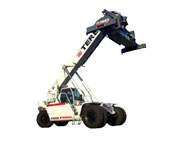
Hyster, along with the whole forklift industry, continued to expand into different product lines throughout the 1950's and 60's. They began building container handlers in the United states in 1959 to meet with the ever growing demand for transportation goods. In 1966, Hyster developed a means for enabling a lift truck to go both ahead and backwards using the same pedal. This pedal was referred to as the Monotrol pedal, which revolutionized the industry. Later on in the decade Hyster opened a research and development centre in Oregon that was concentrated on improving the design and functionality of lift trucks. The centre is still one of the world's greatest testing facilities in the materials handling industry.
1970-1980
In the 1960's Hyster experienced rapid growth. Much of the business was shifting in the direction of mass manufacturing. To keep up with the times Hyster was inclined to concentrate on the evolution of these mass markets. As a result, in 1970, the XL design philosophy was born. The XL design philosophy allowed Hyster to offer better quality at a more affordable price. A further expansion in production capabilities was necessitated by the need in Europe for Internal Combustion Engine Vehicles. To fill this hole, a plant in Craigavon, Ireland was opened in 1980. Through the 1980's Hyster continued to focus on developing industry leading forklifts. The Hyster brand name was recognized throughout the globe for its dedication towards quality. This attention to quality produced numerous suitors for the company. In 1989, a large international business based in Ohio called NACCO Industries purchased Hyster and began an aggressive growth strategy. NACCO swiftly replaced the XL philosophy with a more driver oriented lift truck that concentrated on operator comfort, which is known as the XM generation of lift trucks.
1990-Today
The shift in supply change management to a much more just-in-time focused arrangement has meant that Hyster has had to frequently make investments in new technologies. Acquisitions and investments were made in the United States, Italy, Netherlands, and numerous other places all over the globe. All of these investments have made Hyster a global leader in the forklift market. In 2009, Hyster celebrated its 80th anniversary as an industry leader of materials handling equipment, which comprises over three hundred different styles of forklift trucks.
| |